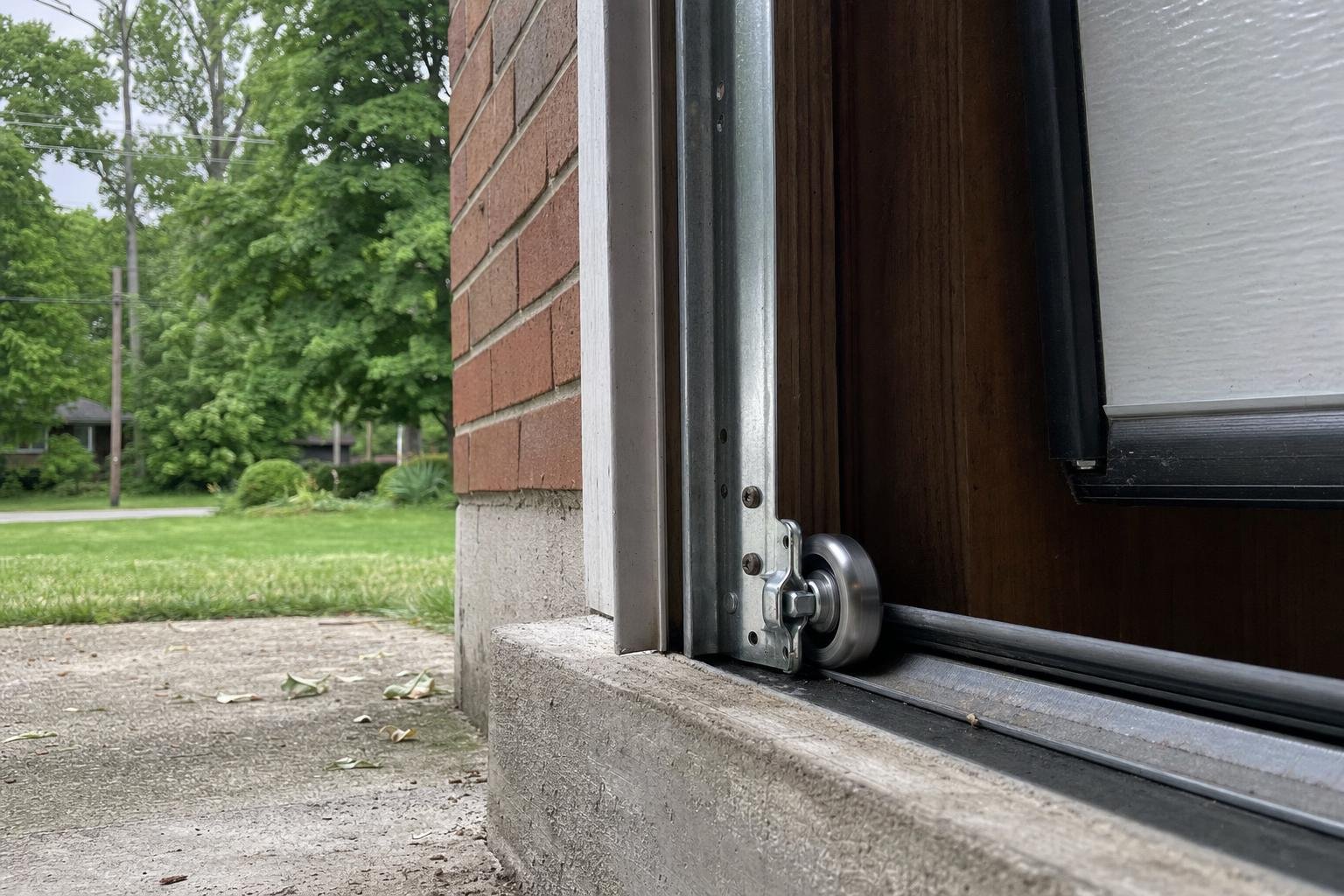
That points to the rollers, the small wheels seated in the hinges that ride the track. Replacing them fixes the movement without touching the opener or the cables. Keystone Garage Door Repair swaps the rollers in your existing hinges, and a short description of the noise is usually enough to tell whether rollers are the cause. You see the roller count and the price on paper before we pick up a wrench.
What does a bad roller sound and feel like?
A bad roller shows up in how the door moves, not in the opener. The door wobbles side to side, scrapes in the track, or fights you halfway through the cycle. If the remote works and the motor runs normally but the door moves wrong, start with the rollers.
You may also see the door sit crooked when it's closed, jump out of the track at the top or bottom, or find a wheel with a flat spot that no longer turns. None of that clears up on its own. If the remote or the motor is what's misbehaving, you need opener repair, and new rollers won't help.
See also garage door track realignment and repair. Ready to hire for garage door repair in Kokomo? Start with our home page.
Related reading: What Happens During Garage Door Repair: The Steps Explained · How to Choose a Garage Door Repair Contractor: What a Good Quote Spells Out
Why do garage door rollers fail?
Rollers fail from use and dry hinges. Each one carries part of the door's weight on every trip along the track, so the wheel wears, flattens, or cracks where it meets the track. Kokomo is in climate zone 5A, with cold winters, so the door works through many months of cold on rollers that nobody oiled.
That's why we lubricate each new roller when we install it. If you can't remember the last time anyone oiled the hinges, it has probably been too long.
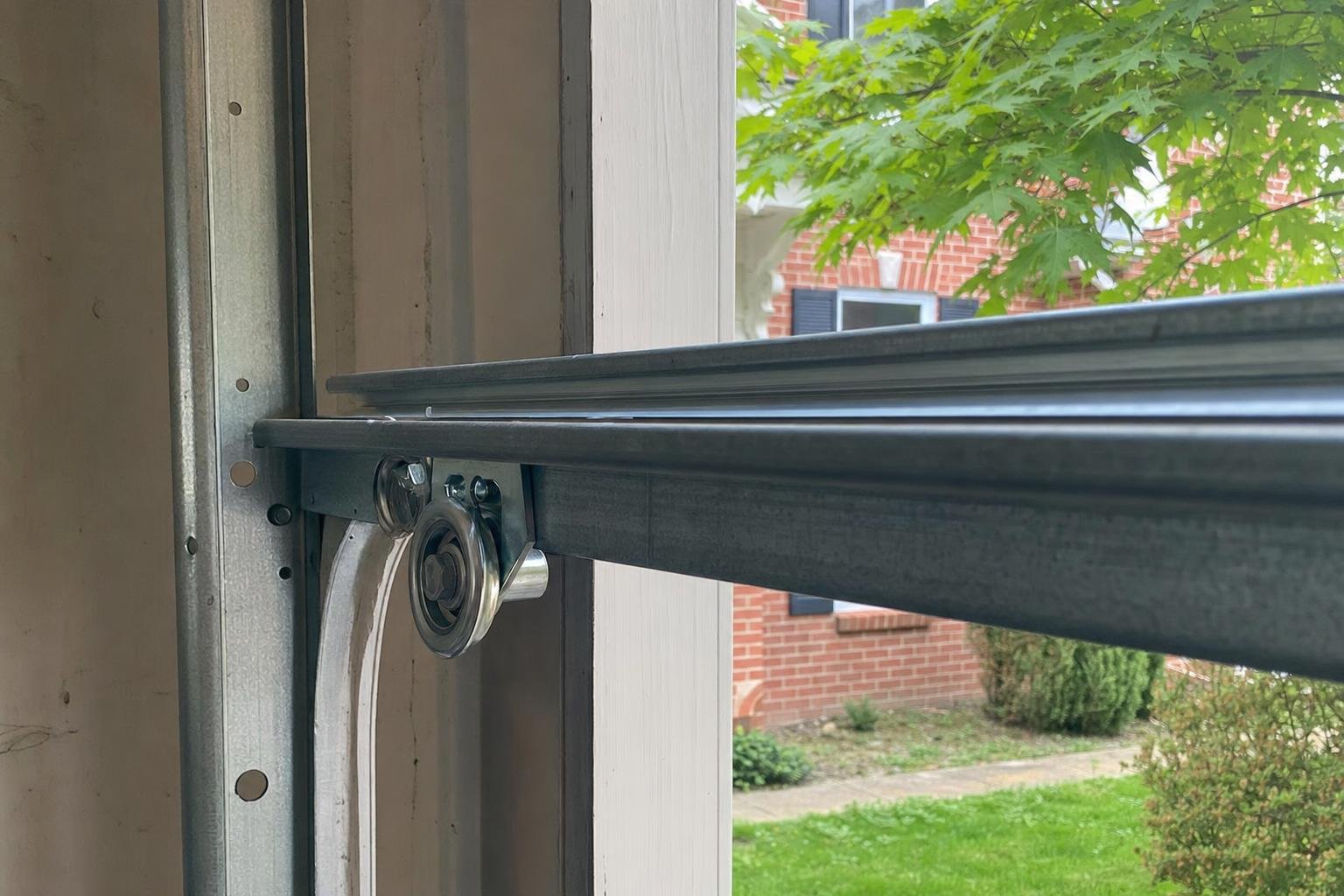
How do we know the rollers are the problem?
We run the door by hand and watch each roller travel the track. A wheel that hops, binds, or won't spin freely is one we replace. We check every hinge, top to bottom, and tell you how many rollers need replacing before we quote the work.
One bad roller usually means the others have seen the same miles. Replacing one and leaving the rest means a second visit later, so we quote the full set unless the rest are clearly fine.
What does the roller replacement involve?
Each new roller goes into the existing hinge and gets lubricated, then is angled into the track. Then we match the hinge to its bolt holes and bolt it back onto the door. The hinges stay, the opener stays, and only the rollers change.
If we see a frayed or slack cable while we're there, we'll point it out as a separate job instead of folding it into the roller quote. Rollers are a hardware swap and leave the opening and its supporting structure alone. Kokomo lists structural modifications as building-permit work, so if you're also changing the opening itself, confirm permit requirements with the city first.
What will this cost?
A full set of replacement rollers runs $19 to $55 in materials alone. On the phone we can talk through a typical range for your door, and the exact number is confirmed in writing after we've seen it and counted the rollers. Nothing starts until you've seen that number.
The figure moves with how many rollers your door needs and which type the hinges take. A frayed cable gets a separate price, so the roller number stays what it is.
Ready to get a quote?
When you reach Keystone Garage Door Repair, we'll ask about the noise, how the door moves, and how long the current rollers have been on, and from that we can usually say whether rollers are the fix. That first call is just questions and answers, with nothing to book.
If it is the rollers, we come out, count them, and put the quote in writing. You don't need to clear out the garage first. The quote is yours to compare or sit on, and we'll tell you plainly if the job can wait or shouldn't.
Related Services
Straight Answers
(765) 776-9896A short call is usually enough, no pressure, no obligation.
Get a Quote